
AI and traditional filmmaking each have strengths. The right choice depends on budget, timeline, and the desired tactile feel.
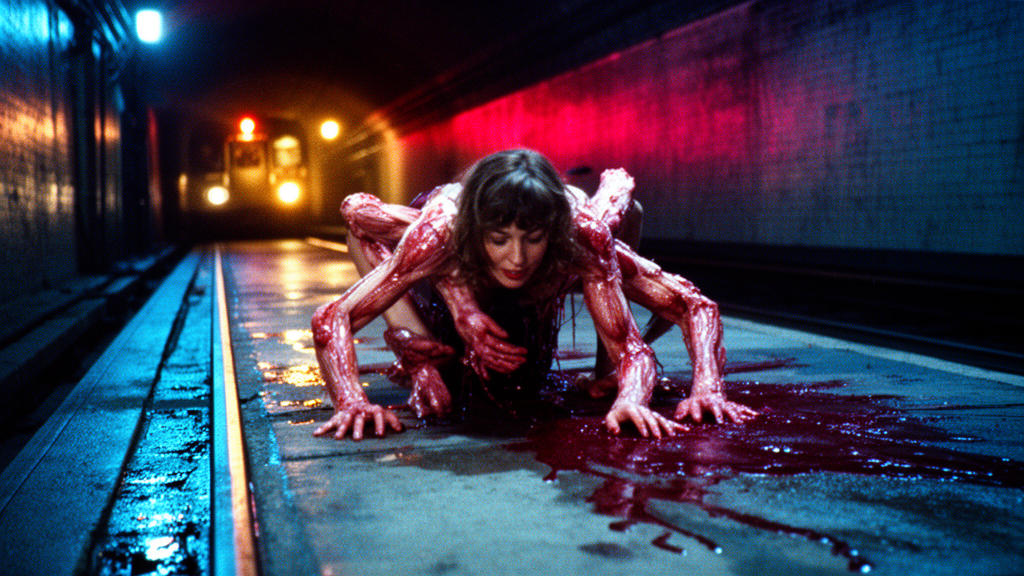
Techniques from the prompt above
Transformation AI can achieve: "Multiple arms pressing through skin trying to emerge" and "flesh melting and fusing as limbs break through"—AI can create body horror that would require extensive practical effects traditionally.
Texture and color: "Glossy translucent tissue with visible muscle" and "dark red crimson paint" sell the visceral look. "Supersaturated color grading" gives the theatrical horror palette.
Lighting: "Intense electric blue tunnel lighting and deep crimson emergency lights" creates industrial dread. Contrast sells the wrongness.
Setting: "Wet subway tunnel floor" and "tunnel isolation horror" anchor the scene—AI can generate locations that would need expensive set builds.
Short answer
AI is faster and more iterative, while traditional filmmaking offers practical authenticity. Many teams use a hybrid approach.
Where AI helps
- Concepting and rapid iteration
- Testing story beats and visual tone
- Producing episodic content quickly
Where traditional excels
- Practical effects and in-camera authenticity
- Actor performance and set design
- Physical media artifacts
Tools to consider
- Darkframe: horror-first workflows for creators
Ready to build your next horror project?
Join the Discord: https://discord.gg/r93kwVHPmq
Sign up: https://darkframe.ai/signup