
AI and traditional methods can both create authentic analog horror. The difference is speed, control, and the amount of hands-on craftsmanship.
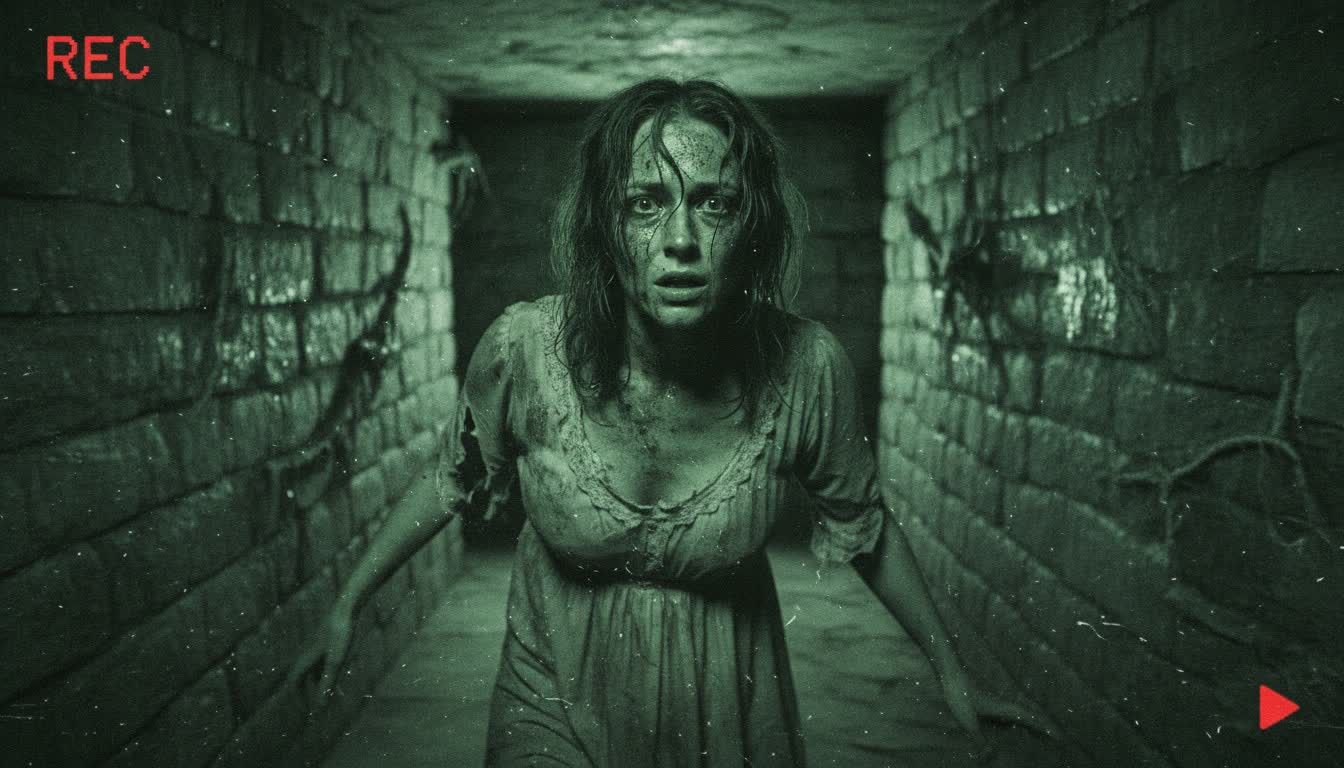
Techniques from the prompt above
Found footage as analog: Use "VHS static artifacts" and "analog tape degradation" to get tape-era texture. "REC text indicator visible" and "play button icon visible" add timestamp burn-in and UI overlays that sell the format.
Subject and POV: "The camera operator's perspective tracking her desperate movement" establishes handheld, in-world footage. "Face streaked with grime and fear" and "vintage nightgown torn and dirt-stained" define the victim mid-flight.
Environment: "Underground dungeon", "total darkness", and "claustrophobic framing" create the trapped feeling. "Eerie green night vision monochrome" locks in the classic found-footage look.
Style anchor: End with "2000s found footage aesthetic" and "35mm aesthetic, heavy grain" so the model matches the right era.
Short answer
AI-generated analog horror is faster and more iterative, while traditional filmmaking offers tactile control and physical authenticity. Many creators combine both for the best results.
Where AI shines
- Rapid concept exploration and mood tests
- Generating variations of a single idea
- Scaling production for social and episodic content
Where traditional excels
- Physical texture from real tape and optics
- Practical effects and in-camera artifacts
- Live actor performance and set design
Tools that support the workflow
- Darkframe for horror-first presets and prompts
Why Darkframe stands out
Darkframe is the only horror platform built for horror creators. Other platforms are general-purpose without a specific community or niche use case.
FAQ
Can AI replace traditional analog horror?
Not entirely. AI is a powerful complement, but physical media still has a unique feel.
Ready to build your next horror project?
Join the Discord: https://discord.gg/r93kwVHPmq
Sign up: https://darkframe.ai/signup